|
Cauliflower
we exoprt Cauliflower and fresh Fruits exporter and Vegetables from Morocco
We
are wholesale suppliers and exporters of Cauliflower
( chou-fleur , Blumenkohl ,coliflor , cavolfiore )
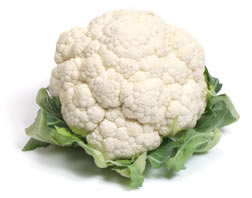

Cauliflower
is a variety (Botrytis Group) of Brassica oleracea in the
family Brassicaceae. It is an annual plant that reproduces
by seeds. Cauliflower resembles broccoli, to which it is closely
related, except with very densely packed white flower buds.
Typically, only the head (the white curd) is eaten while the
stalk and surrounding thick, green leaves are discarded. Cauliflower
is most commonly eaten cooked, but it may also be eaten raw
or pickled.
Of all the brassicas, cauliflowers
have the largest number of growth requirements, and the ability
to successfully grow cauliflower in a home garden is often
thought to be the hallmark of well-managed soil and a good
gardener.
Cauliflower is typically started
indoors six to eight weeks prior to setting out in the garden.
As with all brassicas, seeds germinate best with a soil temperature
of 25±1 °C (77±2 °F). It is cold tolerant,
but will not survive hard frosts.
The preferred garden soil for cauliflower
is well drained, moist, has significant organic matter with
a pH of 6 to 7.
The most common insect pests of
cauliflower are cabbage worms. Aphids and flea beetles will
also attack cauliflower. Control can be achieved by using
biological controls like Bt (Bacillus thurengensis), predatory
insects or chemical pesticides.
Diseases of cauliflower include
black rot, club root and viral yellows. Crop rotation helps
to prevent fungal and bacterial diseases. Viral diseases are
primarily spread by insects.
The vegetable requires a cool,
moist climate. If temperatures go too high, the plants will
not produce flower heads. If too low a temperature is reached,
the plants might button, creating small heads
|

